The Trade & Border Signal · Issue 11
A Corridor That Isn’t There
Hormuz: A shipping corridor cannot be negotiated into existence.
Read the full issue on Substack ↗
The signal
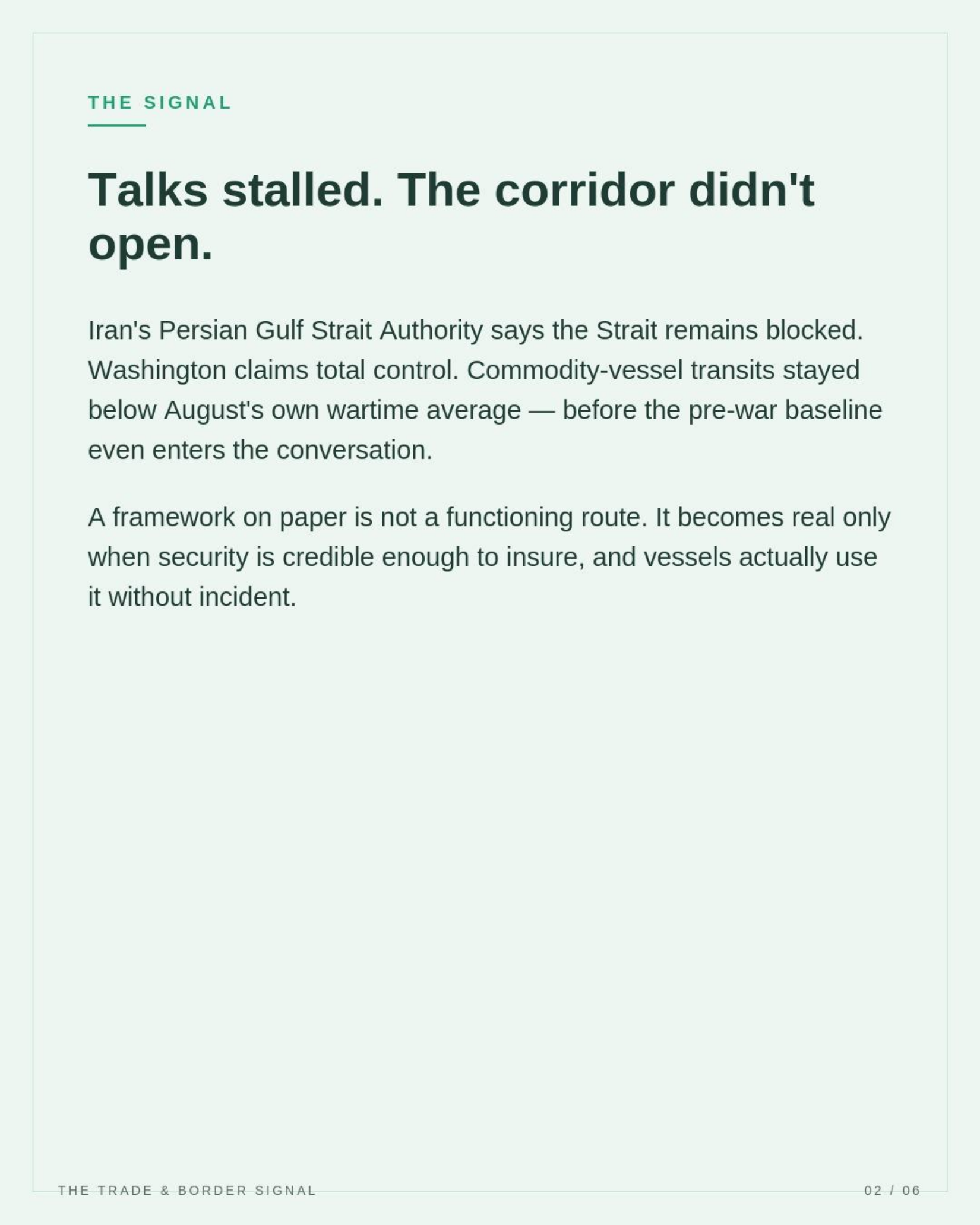
A shipping corridor does not become operational simply because governments agree to create one.
It becomes real when access is recognised, security is credible, insurers are prepared to underwrite the risk, and vessels can transit safely.
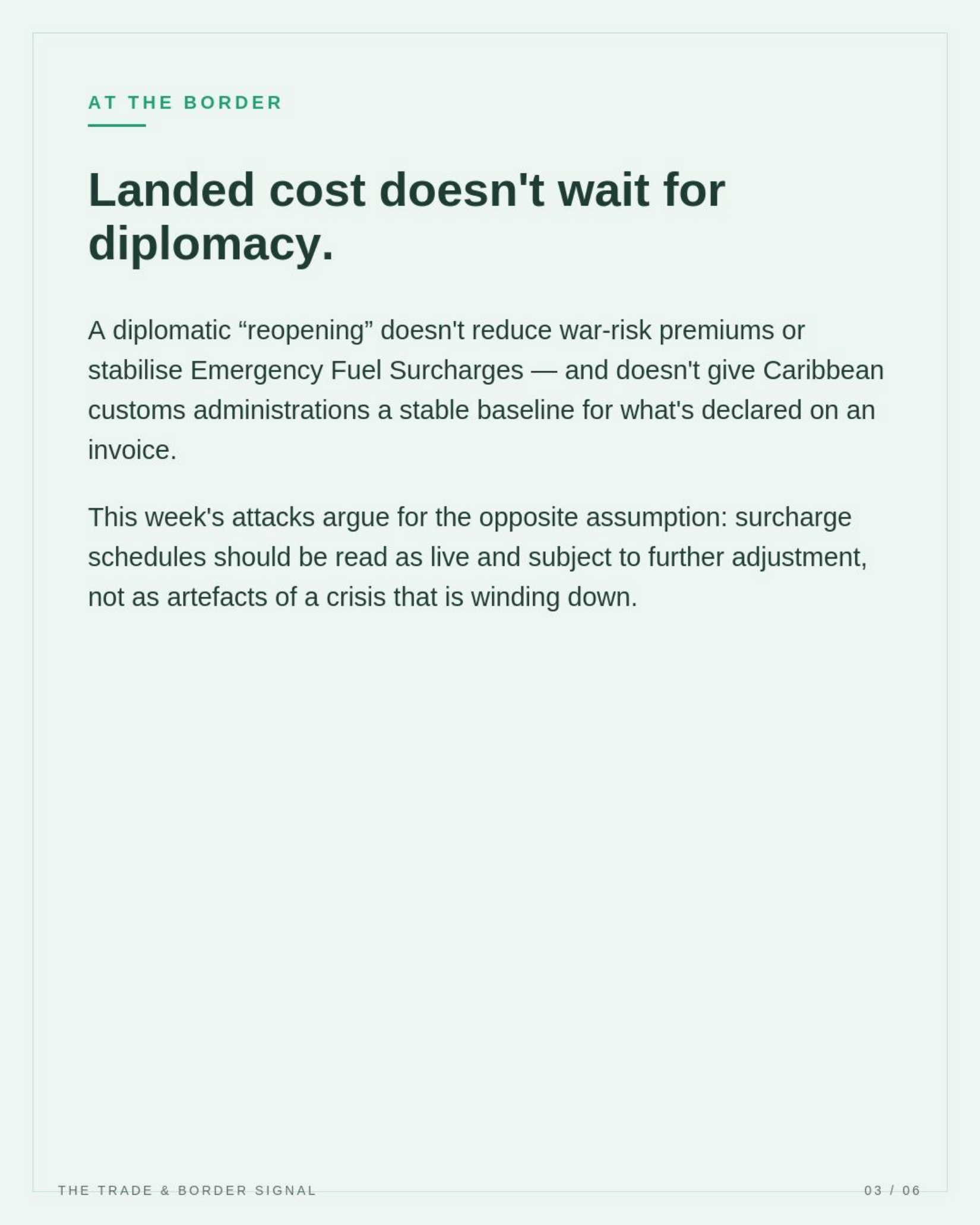
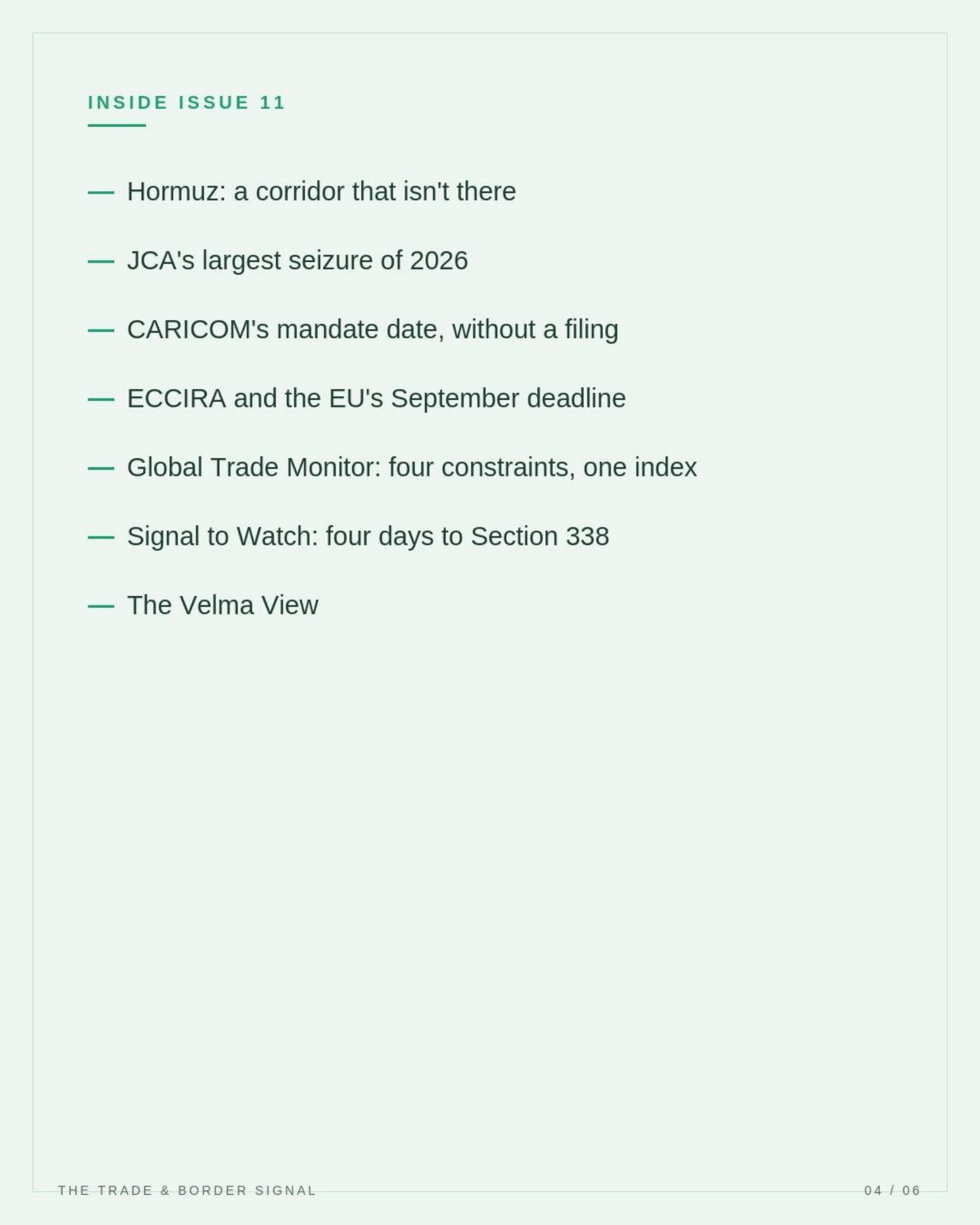
Issue 11 examines the continuing gap between diplomatic announcements and operational conditions in the Strait of Hormuz—and what that gap means for Caribbean customs valuation, freight surcharges, procurement and supply-chain planning.
These developments arise from different policy and operational environments, but they point to the same institutional lesson: organisations that plan around announcements rather than verified conditions risk mispricing their exposure.
For leaders responsible for trade, borders, governance and institutional resilience, the essential discipline is to determine what has formally changed, what is operationally effective, what remains uncertain and what the institution must now do differently.
Carousel briefing
Hormuz: A Shipping Corridor Cannot Be Negotiated into Existence
Swipe or scroll through the six-page visual summary.
Continue reading
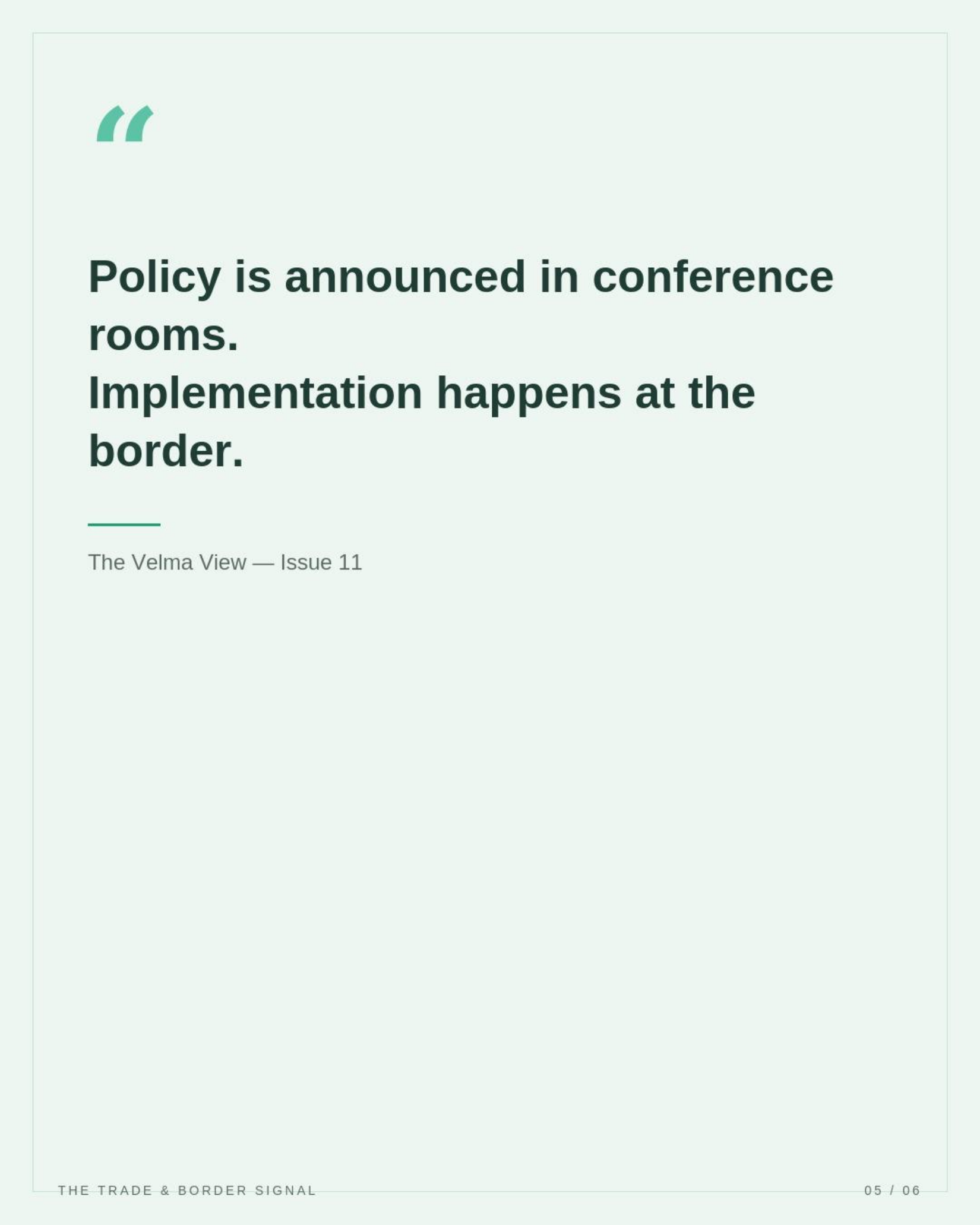
Verified conditions—not announcements—should govern institutional planning.
Read the full brief on The Trade & Border Signal on Substack.
Read the full issue on Substack ↗For further information, speaking engagements, research collaboration or advisory enquiries relating to this topic, contact velma@walkermeridian.com.